


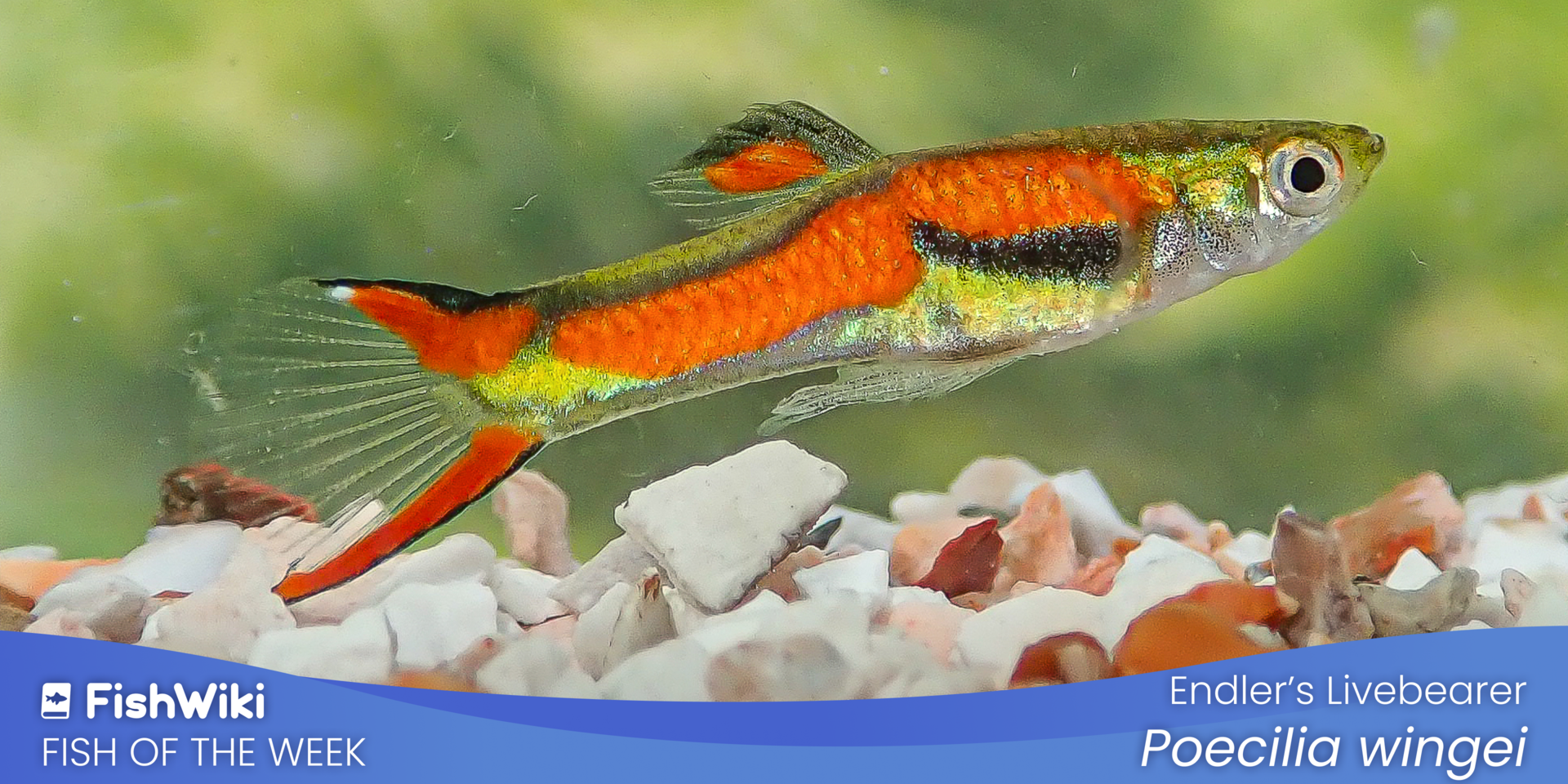
This week's fish is the Endler's Livebearer (Poecilia wingei)!
The Endler's Livebearer is named after Dr. John Endler who collected the species in 1975 and brought it into the aquarium trade. The specific name of Poecilia wingei honors the Danish biologist Øjvind Winge who worked extensively on the genetics of Poecilia including this species. It is native to the Paria Peninsula in Venezuela where it lives in warm coastal lagoons, streams and canals. It's closely related to the guppy (Poecilia reticulata) and many colorful hybrids have been created between the two species, but Ender's livebearers are generally smaller and have thinner caudal peduncles than their guppy cousins. Every male has a unique pattern consisting of streaks and spots of black, yellow, green, red, and blue. They exist in groups and feed on microorganisms, algae, and small insect larvae in their natural habitat. Pure P. wingei are rare in the hobby, but they can still be found under the care of dedicated breeders. A few morphs of this species exist and represent individual populations that come from unique collection points in their native range. Many captive lines are maintained today thanks to hobbyists who aim to preserve their genetic diversity by collecting breeding stock from Venezuela. One population from Laguna de Patos (the type locality for the species) is believed to have gone extinct due to polluted runoff from a nearby landfill. Endler numbers in the wild are declining and are now considered endangered by the IUCN Red List due to habitat loss and pollution from urbanization. In the aquarium they are very hardy and adaptable, but care must be taken if they're maintained in a community setup. P. wingei is small and should be kept with similarly sized peaceful species. Males are not aggressive towards each other but females can be territorial with each other. Breeding them is extremely easy, however care should also be taken when breeding different morphs to prevent hybridization. Like other livebearers, females hold eggs and the fry hatch internally before being born. P. wingei have small mouths and do not normally prey on their fry like other livebearers.
Sources and further reading: